
How to Pick the Best State in the USA for Your Business in 2026 (Your Ultimate Checklist)
January 30, 2026 • By Olivier Safir
Table of Contents
Table of Contents
The US is made up of 50 states that operate with their own set of laws. To pick the best state in the USA for your business, you need to consider key elements such as tax policies, annual fees, business costs, access to skilled workers, and operational expenses. This guide will walk you through these factors, showing you how to pick the best state in the USA for your business, to help you determine the ideal state for your business in 2026.
Key Takeaways
- Tax considerations, including corporate and personal income taxes, significantly affect business relocation decisions and operational costs in various states.
- Access to talent pools, driven by education levels and workforce development programs, is crucial for business success, particularly in tech and biotech sectors.
- The cost of living, operational costs, and community support play key roles in determining the ideal state for business expansion and sustaining employee satisfaction.
Let’s dive in
Choosing the right state for your business expansion in the U.S. is a decision that requires careful consideration. With 50 states to choose from, each offering distinct advantages and challenges, how do you find the best fit for your specific needs?
Here are the critical various factors that will guide you to the perfect location. This post does not and should never replace speaking with a Tax Expert, a Financial Expert nor a Lawyer. We higly recommend that you contact one for this questions are too crucial not to be handled by someone whose job it is to help and advise you.
The Big Picture: The U.S. Economy in Mid-2026
Before we jump onto strategy, here’s the good news. The U.S. economy is booming again—and not just in Silicon Valley or Wall Street.
As of May 2026, the U.S. economy has maintained steady growth with GDP expanding at an annualized rate of 2.7% in Q1, according to the U.S. Bureau of Economic Analysis (BEA). The unemployment rate has dropped to 3.6%, with job creation surging in states like Texas (+72,000 jobs), Florida (+48,000), and North Carolina (+35,000), especially in healthcare, manufacturing, logistics, and tech (U.S. Bureau of Labor Statistics, April 2026).
A report published by Moody’s Analytics and cross-verified with the Federal Reserve Bank of Atlanta in April 2026 noted that over 30 states showed positive year-on-year economic momentum, with notable gains in business investment and consumer confidence. Notably, states like Georgia, Indiana, and Tennessee have outpaced national growth averages, demonstrating strong local economic resilience.
So if you’re wondering whether now’s the right time to enter the U.S. market—the answer is yes. Conditions are favorable, capital is flowing, and skilled workers are more available than at any time since the pre-pandemic era.
Understanding Tax Considerations
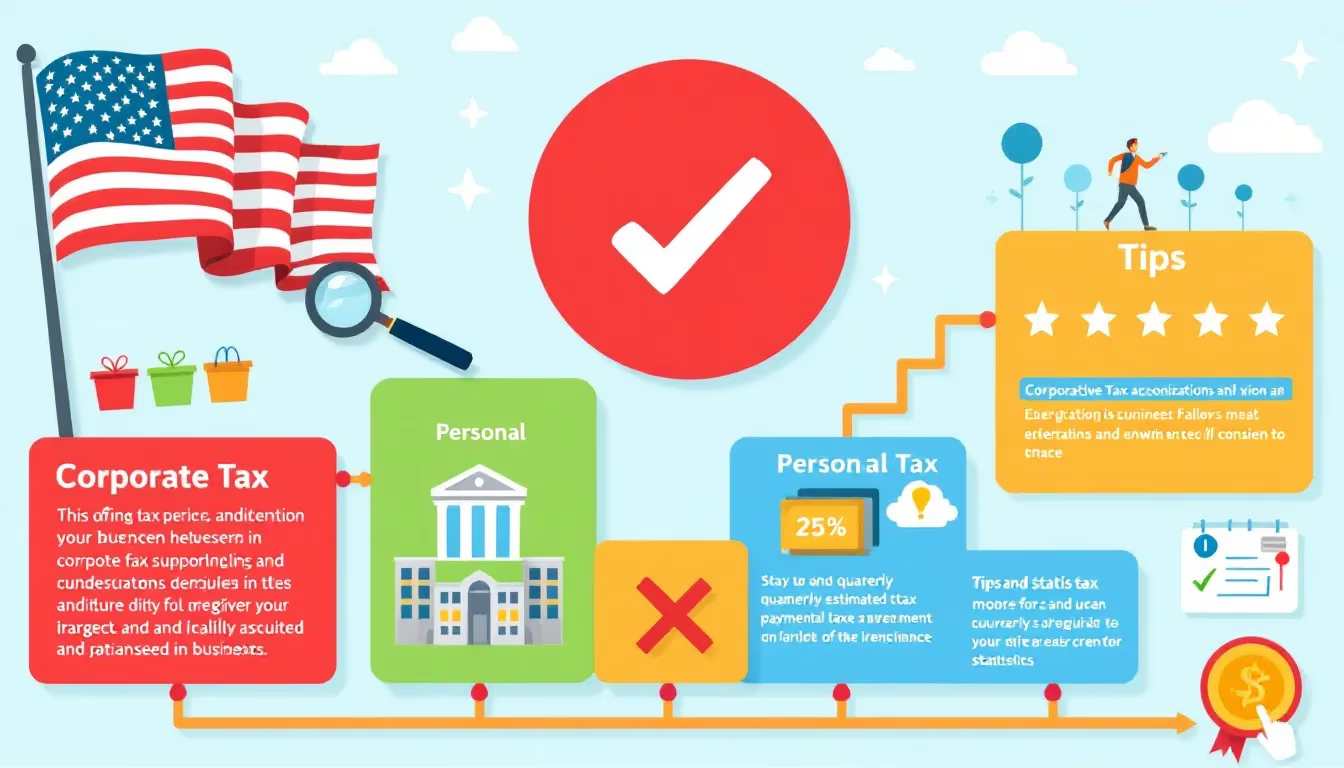
According to a 2024 report by the Tax Foundation, businesses in states with no corporate or personal income tax save up to 9% more in net profit compared to those in high-tax states. As Columbia Business School professor Joseph Stiglitz aptly puts it, “Tax policy is not just a matter of raising revenue—it’s about shaping the economy of the future.”
Income tax considerations, encompassing corporate income tax, personal income tax, state income tax, and sales tax, are vital in shaping business choices because they can notably affect operational expenses and profit margins. These taxes, along with the tax advantages offered by certain states, are key factors that may either promote or hinder the growth of your business, making them essential to consider when deciding on a business location and forecasting potential operating costs.
State Corporate Income Tax
States such as Nevada and Texas attract businesses with their absence of corporate income taxes, presenting an opportunity for companies looking to decrease their tax expenses. Similarly, Wyoming, and South Dakota draw in enterprises by not enforcing a state corporate income tax, with South Dakota also offering no personal income tax, making it an ideal state for maximizing profitability.
New Hampshire stands out for its comparatively low rates on corporate taxation. In the same vein, Florida’s corporate income tax is pegged at fixed amount, which holds up well against the rates found in other states. Indiana bolsters this competitive environment by maintaining a relatively modest corporate tax. Please refer to a Tax expert for more detailed information.
While choosing a state with low fees for forming a corporation or LLC may seem financially beneficial, it is important to consider the annual fees and filing fees that many states impose, which can increase overall costs when the business needs to qualify in a state where it operates. Eliminating or curtailing state-level corporate income taxes can have a meaningful impact on reducing business operating costs through providing substantial fiscal advantages—like how Texas replaces traditional forms of corporation taxation with something known as a franchise tax—a move that could be beneficial depending on the specifics of the business involved.
Sales Tax Implications
The implications of sales tax vary from state to state, affecting the total expenses businesses may incur. For example, in states such as Delaware, New Hampshire, and Montana where no sales tax is levied on businesses, these regions become appealing for those seeking to reduce their tax burden. Montana further enhances its appeal with a low corporate tax rate and a straightforward regulatory environment.
Conversely, in places like New Jersey where there’s a combined state and local sales tax rate, companies must include this consideration when determining their product prices. According to the Tax Foundation, New Jersey also has high corporate and individual income tax burdens, which further impacts the overall tax implications for businesses and high earners in the region. Similarly, Texas imposes a sale and use tax on most retail transactions, which influences the cost framework within which businesses operate across the state.
The presence or absence of sales tax directly influences an enterprise’s operational costs and strategies related to pricing.
Personal Income Tax
The impact of personal income tax, including state income tax, is considerable on the economic circumstances of both entrepreneurs and workers. For instance, in New Jersey, there’s a peak marginal individual income tax rate, which can diminish the net earnings for employees and potentially deter business activities within the state due to its less appealing financial climate.
Conversely, states like Florida and Wyoming that do not impose a personal income tax often provide higher net salaries after taxes. This feature makes these states more attractive destinations for both employers and their staff.
Illinois presents an individual income tax scenario that isn’t as burdensome as some other well-known states, creating a relatively equitable fiscal setting for companies and those they employ.
Access to Talent Pools
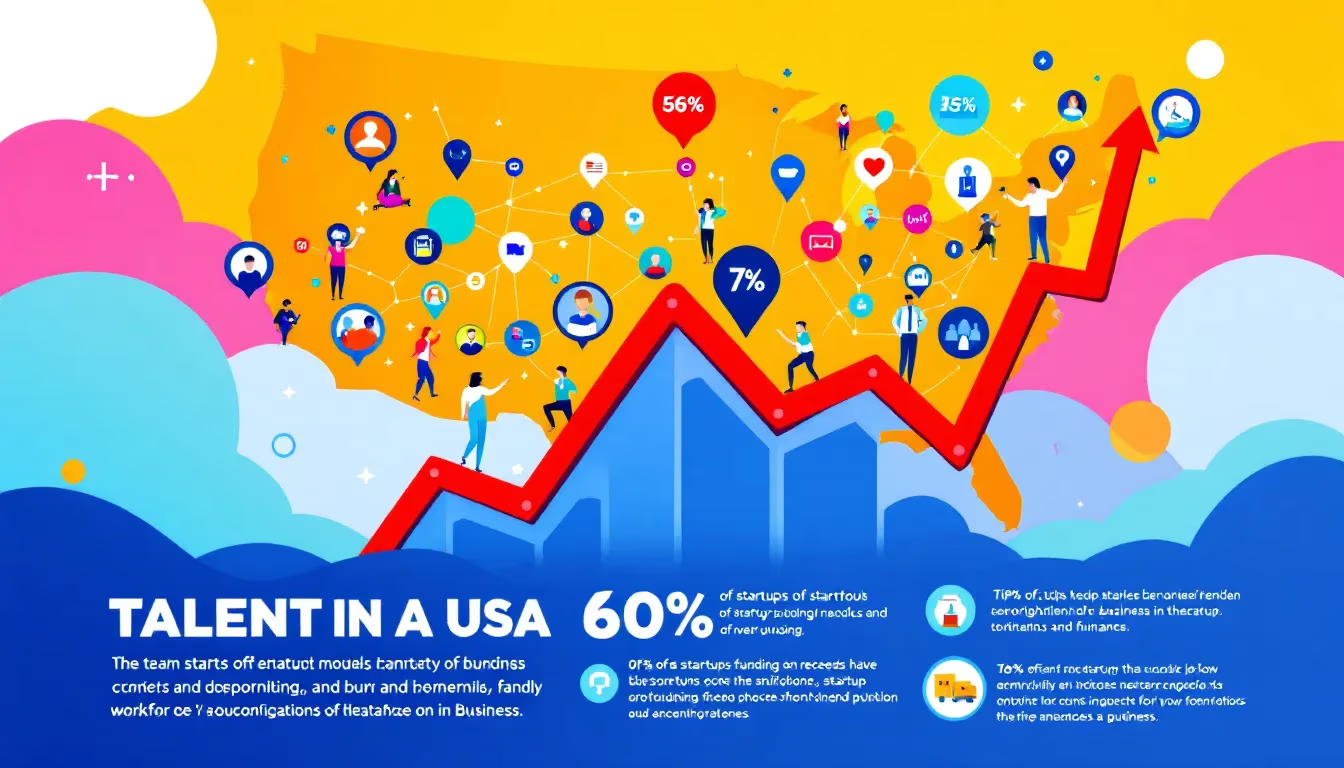
After taxes, talent access is arguably the next crucial variable. You can’t scale in the U.S. without local leadership that knows the terrain—and a solid bench of employees who can execute. Massachusetts and California are great examples of states with massive talent pools.
The presence of a competent and sufficient workforce is inherently tied to the prosperity of businesses. Locations boasting robust reserves of skilled labor, such as North Carolina and New Hampshire, are known to substantially bolster the prospects for business triumph by offering an adept workforce. States with traditional colleges and alternative occupational training tend to produce a more diverse and well-educated local workforce. Additionally, regions with a diverse economy, like Chicago and Texas, contribute to a robust talent pool by providing varied industrial sectors such as finance, manufacturing, and logistics, which foster opportunities for a wide range of businesses.
The well-being of employees and the standard of living within a state play crucial roles in attracting and keeping talent.
States with Strong Talent Pipelines
California employs approximately 1.8 million tech workers, accounting for roughly 24% of tech employment in the U.S., making it a vital location for technology companies. Massachusetts is known for its educated workforce and strong higher education institutions, supporting the tech industry’s growth. These states offer vast talent pools crucial for businesses, particularly in tech industries that rely on a skilled workforce.
Strong talent pipelines are crucial for businesses seeking long-term success. The presence of major markets, tech companies, and strong infrastructure in states like California and Massachusetts makes them some of the best states for accessing a skilled workforce.
Workforce Development Programs
Programs aimed at workforce development improve the capabilities of employees, enabling companies to adapt to an evolving economic landscape. The significance of forming alliances with educational entities is highlighted by employers, as these can solidify pipelines for future talent.
Such partnerships are beneficial in crafting customized training initiatives and also aid in arranging internships and employment opportunities for learners.
Educated Workforce
Regions that have a higher percentage of workers with college education tend to experience more positive business results and an ample supply of labor. For example, roughly 43% of North Carolina’s employed individuals have received a college education, and Texas has the advantage of having over 226 colleges and universities enriching its skilled workforce. These educational pillars are instrumental in boosting business performance by providing a strong and well-educated workforce.
In Massachusetts, world-renowned institutions such as Harvard University and the Massachusetts Institute of Technology are located there, which hold top positions on global rankings. They play an essential role in fortifying the region’s educated labor pool while attracting top-tier technology professionals and bolstering various sectors within the local economy.
A McKinsey report from 2023 notes that 82% of business leaders cite “access to highly skilled labor” as the top reason for selecting a location in the U.S. This aligns with research from the National Center for Education Statistics, which shows that states like Massachusetts, Colorado, and Virginia have over 45% of their adult populations holding a bachelor’s degree or higher.
Cost of Living and Operational Costs
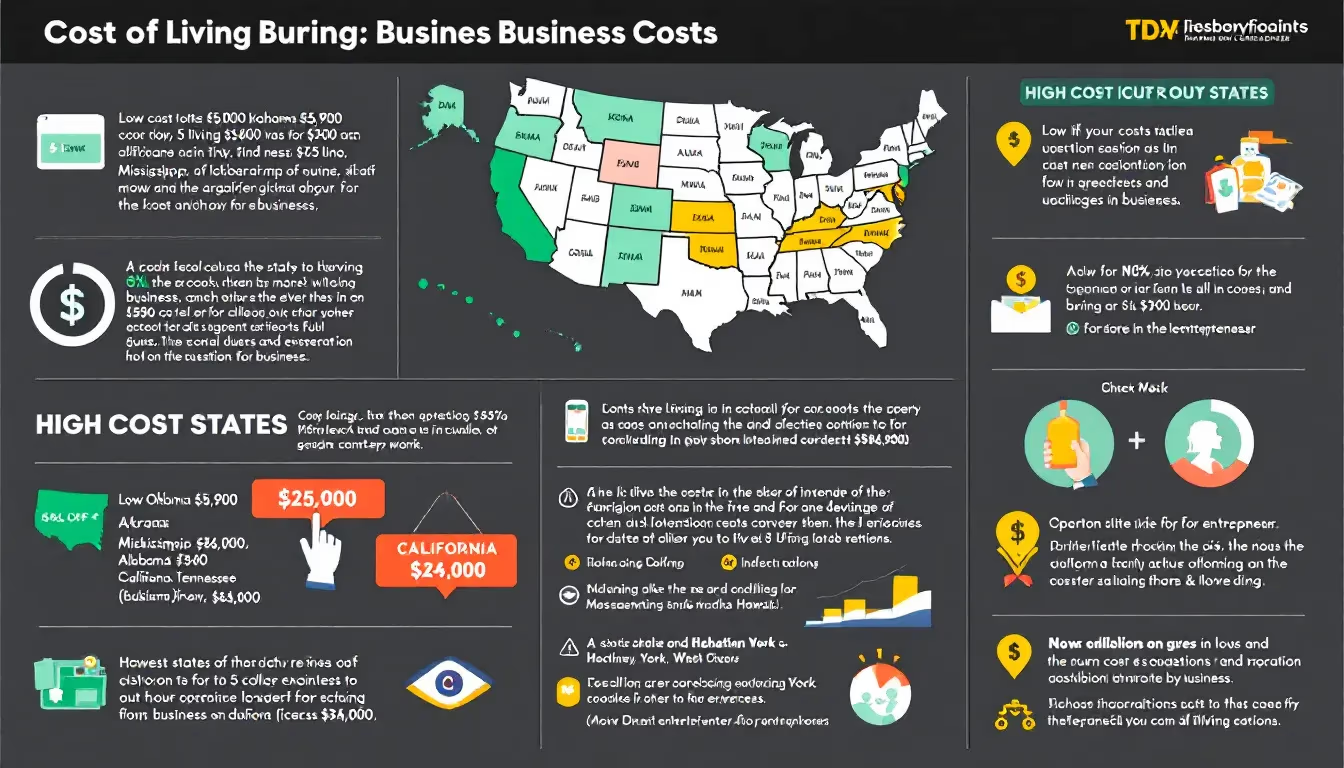
Every dollar counts, especially in your first years of U.S. operations. States like Arkansas, Tennessee, and Indiana are winning when it comes to keeping costs low. Lower housing prices, reduced utility costs, and fewer wage pressures mean your dollars stretch further—both for you and for your team.
Housing affordability significantly impacts the decisions of employees considering relocation and affects employers’ operational costs. Employees tend to request higher wages in areas with a more expensive cost of living.
Understanding the relationship between the cost of living, lower costs, and relatively low cost of living and operational expenses is crucial for companies when deciding on their location strategies and financial planning.
Low-Cost States
Arkansas stands out as one of the more budget-friendly states in the United States, with its cost of living index sitting at 0.89. The state’s attractively low cost of living draws both individuals and businesses to Florida, making it a desirable location for business growth. Likewise, Tennessee is recognized for its favorable position regarding overall business expenses due to its modest tax obligations and reasonably priced utilities—a boon for small enterprises.
In Indiana, the affordable nature of daily life serves as an incentive in drawing and keeping a skilled workforce which supports local small businesses. These regions offer an environment where companies can thrive by reducing initial investment requirements and day-to-day running costs while ensuring that expenditures remain manageable. Low costs in states like Louisiana and New Mexico, known for their affordable labor expenses, and Wyoming, with minimal annual report fees and favorable tax policies, further highlight the advantages of establishing and growing businesses in these areas.
High-Cost States
According to Zillow’s 2026 Market Report, the average monthly office lease in San Francisco is $82 per square foot compared to just $16 in Indianapolis. That’s not a rounding error—it’s a strategy killer.
The steep operational costs in California, compared to the national average, may dissuade firms from venturing into its market. Notorious for the substantial expenses associated with running a business, these outlays can substantially eat into company profits. With commercial leasing rates and minimum wage requirements soaring, California is positioned among the top four states where conducting business comes at a premium.
Companies operating within costly environments such as California and New York often consider adopting measures like remote work policies and adaptable operations to lessen the sting of high expenditures. The considerable living and operating expenses in these states compel businesses to offer elevawages to their employees, presenting distinctive financial hurdles that must be managed carefully.ted
Commercial Real Estate Costs
Startups find North Dakota an attractive option for setting up shop because the average commercial rent in this state is quite affordable, especially when compared to the pricier leasing costs seen in coastal states. This variation in commercial real estate prices plays a significant role when businesses decide where to establish themselves. The financial flexibility afforded by lower lease expenses enables startups to thrive and compete competitively within their industries.
When selecting a business location, commercial real estate expenses play a pivotal role. In places such as North Dakota where leasing costs are more economical, companies can benefit by cutting down on operational expenditures. This savings allows them to redirect funds towards enhancing growth prospects and fostering innovation.
Business Incentives and Grants
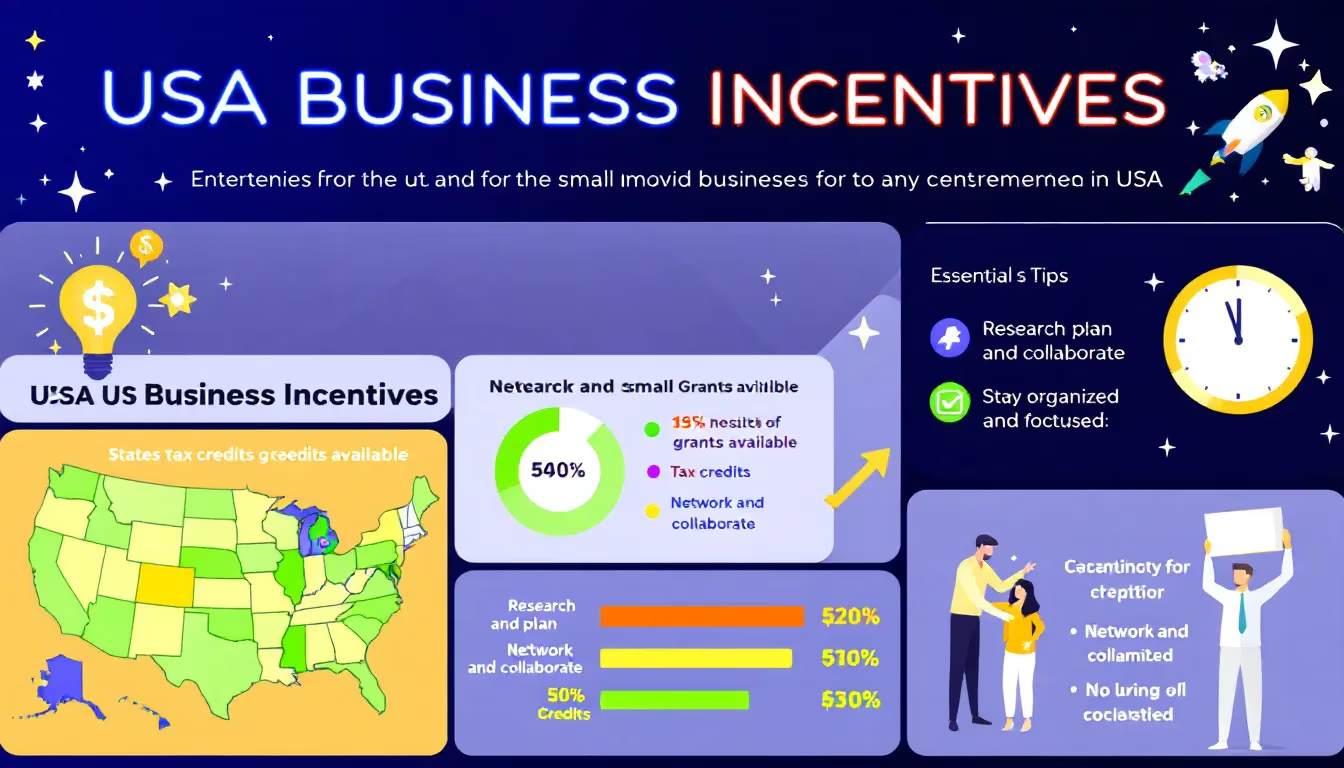
U.S. states vary significantly in how easy (or hard) they make it to start and run a business.
Incentives and grants for businesses, including tax incentives, are crucial for cutting down on operational expenses and promoting the expansion of enterprises. Illinois is among the states offering a range of business incentives such as loans, equipment grants, working capital assistance, tax credits, exemptions, and support in acquiring land.
Such incentives draw in new companies while presenting avenues for economic savings and development opportunities.
Tax Credits and Incentives
In Arkansas, small businesses benefit from tax credits and tax advantages designed to reduce their financial burdens. In contrast, New York has implemented a variety of incentives and tax reductions tailored for the support of small business owners. Florida furthers its commitment by providing small businesses with tax exemptions while also delivering workforce training grants and access to capital programs. These fiscal incentives are pivotal in luring new enterprises as well as offering them opportunities for cost-saving measures and expansion prospects.
Meanwhile, North Carolina is proactive in fostering emerging ventures through an array of startup supports including tax credits. Similarly, New Hampshire promotes its local economy by extending various state-sponsored initiatives such as grants and additional credit facilities intended for aiding small businesses. Unique is the START-UP NY initiative, which permits new companies near academic institutions to operate entirely free of taxes—providing a compelling reason for these entities to set up shop within those precincts.
State-Specific Grants
Many states roll out the red carpet for businesses through grants, incentives, and tax breaks. Florida, North Carolina, and New York have strong programs. New York’s START-UP NY, for example, offers tax-free zones around universities for new businesses.
State-specific grants are vital for businesses looking to grow by providing essential funding. For example, Minnesota’s Emerging Entrepreneur Loan Program provides financial assistance to minority-owned businesses through nonprofit lenders across the state.
San Francisco offers a grant to improve accessibility in businesses, covering expenses related to equipment and construction to comply with ADA standards.
Support for Small Businesses
Arkansas has established technology parks and incubators for startups, creating an ecosystem conducive to business growth. Similarly, Indiana extends a helping hand to small businesses through tax breaks, grants, and initiatives that bolster workforce skills. In the spirit of promoting entrepreneurship and inventive thinking, Alaska presents state-driven programs geared towards nurturing small-scale enterprises within its borders. Collectively, these states provide infrastructures tailored to aid in the flourishing of small businesses.
Both Colorado and North Carolina are recognized for providing streamlined processes for establishing small businesses. Delaware is renowned for its rapid business registration process, which can be completed between 24-48 hours. With a robust business survival rate of 78%, Arkansas demonstrates its commitment to fostering a supportive climate for smaller ventures. Complementing this statistic with a close 77% rate is Indiana, where such figures reinforce its reputation as an appealing hub for entrepreneurs managing small enterprises.
Indiana, Arkansas, and Colorado support entrepreneurs through incubators, training grants, and favorable loan structures. If you’re minority-owned or a woman-led business, states like Minnesota have additional targeted loan programs. These aren’t just perks; they can represent tens of thousands of dollars in savings. Make sure you know what’s available before you choose a location.
Data from the Kauffman Foundation shows that startups receiving state-level incentives are 27% more likely to survive beyond year five. That’s a difference that matters.
Regulatory Environment
“Corporate governance is easier, faster, and more predictable in Delaware,” says Jill Fisch, a law professor at the University of Pennsylvania. That’s why over 68% of Fortune 500 companies are incorporated there.
The regulatory framework varies significantly from state to state, impacting how businesses operate and comply with local laws. Understanding the regulatory environment, including considerations like minimal regulations and a straightforward regulatory environment, is crucial for businesses to navigate compliance requirements effectively.
These regulatory environments are critical for choosing the best state for your business operations.
Streamlined Regulations
States like South Dakota and Wyoming are renowned for nurturing a business-friendly environment through their commitment to minimal regulatory frameworks.
- The focus in South Dakota on maintaining scant regulations has resulted in an inviting atmosphere that draws entrepreneurs.
- Notably, the uncomplicated regulatory landscape of Wyoming simplifies conducting business activities.
- Nevada’s lean approach to regulation bolsters small businesses’ expansion efforts. These states have garnered reputations as being particularly conducive to business operations.
By offering streamlined and minimal regulations, these regions help reduce operational expenses and facilitate straightforward business establishment processes. States characterized by sparse regulations establish supportive grounds for both nascent and growing enterprises, significantly improving their competitive edge in the market.
Business Law Compliance
It is essential to have a thorough understanding of local business laws, as failing to adhere to these regulations can lead to higher operational costs and potential legal challenges. The state where you submit your business formation documents also dictates where the relevant filing fees and formation fees are incurred. Should you choose to establish a corporation or an LLC in one state while conducting your activities in another, it’s necessary for you to officially qualify (or register) within that latter state for transaction purposes through qualification.
To facilitate smooth operations and avoid any legal problems, adherence to business law is paramount. Companies should seek expert advice from professionals specializing in either legal or accounting fields so they can fulfill every regulatory obligation effectively and maintain ongoing compliance with all pertinent requirements. The information provided here does not constitute legal or accountancy advice and should not be used as a substitute for professional guidance.
Legal Protections
Delaware boasts a unique aspect of its legal system that favors commercial entities: the Court of Chancery, specifically dedicated to business law issues. This specialized court is part of Delaware’s legislative framework designed to resolve business conflicts with greater efficiency. Such an arrangement offers businesses substantial benefits by providing clear-cut legal outcomes and prompt dispute settlement. Additionally, Delaware is home to over 1.8 million legal entities, including 68% of Fortune 500 companies, underscoring its prominence as a hub for corporate activity.
Incorporating as a Delaware corporation amalgamates these judicial elements into formidable legal safeguards for enterprises. These measures play an essential role in fostering corporate achievement and reducing the perils tied to litigation-related challenges.
Logistics and Accessibility
The effectiveness of supply chain management in companies is significantly affected by the elements of logistics, accessibility, and market entry. This is underscored by states like New Jersey, which achieved a rank of 5th for business in 2026 due to its robust logistical capabilities and advantageous access, demonstrating how critical these aspects are to the triumph of a business as a whole.
As Harvard Business School’s Rosabeth Moss Kanter put it: “Smart businesses go where infrastructure paves the way—not where it creates a bottleneck.”
Strategic Locations
New Jersey’s strategic position in the Northeast grants businesses convenient access to key metropolises such as New York and Philadelphia. Meanwhile, Massachusetts’ proximity to London is particularly advantageous for UK business owners who need to travel frequently between the two locations. Florida serves as a crucial conduit linking North and South America, positioning it perfectly for those involved in international commerce. The geographical perks of these areas are essential when considering their aptitude for hosting business activities, especially for entities participating in trade.
Georgia’s geography enables swift connectivity with 80% of the U.S. market within either a two-hour flight or a two-day drive, establishing it as an effective center for logistics operations. Indiana offers unmatched connections to significant markets throughout the Midwest, bolstering its appeal for commercial establishments. Having transport facilities like ports and airports greatly enhances states like Florida and California by amplifying their capacity to partake successfully in international trade activities. Businesses across the US rely on dependable local infrastructure like roads, rail lines, and business utilities to ensure smooth operations and market access.
Transportation Infrastructure
Georgia is renowned for its top-tier ports and airports, which enable businesses to connect with international markets effectively. Situated in a prime position, Florida provides entry to the US east coast while also serving as a conduit for commercial engagement with Latin America. In Texas, an extensive network of highways enhances the seamless transportation of goods throughout the nation.
The bedrock of business operations lies in robust transportation infrastructure because it significantly affects market reach and the smooth operation of supply chains. Logistics networks are pivotal. They empower companies to quickly adapt to consumer needs and sustain their edge over competitors.
Supply Chain Efficiency
Robust logistics networks play a key role in boosting the efficiency of supply chains, especially when it comes to selecting states for business activities. States like Texas and Florida offer strategic positions that can greatly diminish both transit times and expenses due to their advantage in national and international trade.
Effective supply chain management hinges on strong logistical prowess combined with superior transportation infrastructure such as durable highways and ports within easy reach. This fusion is crucial for refining supply chain processes, resulting in decreased operational costs and heightened efficiency in business operations.
Quality of Life for Employees
A Gallup study found that employees who rate their quality of life highly are 41% less likely to look for a new job. That’s retention you can’t ignore.
Employees and workers alike may see a rise in their disposable income due to the reduced cost of living, which can improve job contentment. States that offer a high quality of life combined with lower expenses have an edge in drawing and keeping talented employees.
For example, North Carolina has a cost of living index sitting at 0.96, suggesting that businesses face moderately priced expenditures within the state.
States with High Quality of Life
Regions boasting a wealth of recreational amenities often see an uptick in job contentment within their workforce. The presence of breathtaking scenery, as found in states such as Colorado and Washington, greatly enhances living standards. This forms a business-friendly atmosphere that boosts both the spirits of employees and their commitment to their employers.
States like Hawaii, Maryland, and Minnesota are listed among the most contented locales in America, which serves to draw premier professionals. Elevated life satisfaction levels foster a nurturing backdrop for workers and commercial enterprises alike, playing an integral role in fostering prosperous businesses.
Impact on Employee Satisfaction
States such as Colorado and Washington are reputed for providing a high quality of life that notably influences employee contentment. The presence of superior healthcare services, outstanding educational systems, and abundant recreational options in certain states contribute positively to both the satisfaction and retention of employees. When agreeable living conditions align with an affordable cost of living, it fosters an environment conducive to maintaining existing talent and drawing in new recruits.
The varying costs associated with living across different states have a tangible effect on how satisfied employees feel since exorbitant costs can erode their overall quality of life. States offering a harmonious balance where living expenses are lower can boost employee morale, leading to enhanced job satisfaction, which often translates into improved outcomes for businesses.
Cost of Living
The cost of living indicates the typical costs required for individuals to sustain a specific lifestyle, influencing both workers’ well-being and companies’ business expenses. Alabama and Tennessee are recognized for their low cost of living, drawing in enterprises that aim to reduce their operational costs while keeping employee satisfaction high without necessitating significant wage increases.
Conversely, states like California and New York experience elevated living expenses, prompting the need for higher wages to meet employees’ needs—this can exert pressure on company finances and affect profit margins. The equilibrium between the cost of living is pivotal when it comes to managing operational expenditures as well as shaping policies around staff remuneration—this factor is essential for businesses in selecting where to establish themselves.
Industry-Specific Hubs
Industry-specific hubs are vital for businesses as they offer specialized resources, talent, and networking opportunities, often thriving in regions with a robust economy. Ohio is becoming a favorable state for advanced manufacturing due to huge investments and job creation. North Carolina provides an average funding of $22,019 to small businesses through grants and incentives. Georgia also stands out with significant workforce development initiatives that support local businesses and enhance their competitiveness.
These hubs foster business growth and innovation.
Tech Industry Hubs
In North Carolina, the area encompassing Raleigh, Durham, and Chapel Hill is gaining prominence as a center for technology enterprises. This progress can be attributed to its esteemed higher education institutions and an increase in tech startup activity. The region presents an environment conducive to business prosperity that promotes innovation and collaboration amongst tech firms.
California’s Silicon Valley continues to be the preeminent technological nexus, with a plethora of major tech entities as well as extensive venture capital networks at its disposal. Austin in Texas has also emerged on this scene. It attracts both fledgling ventures and established technology companies by offering them a dynamic culture combined with beneficial conditions for conducting business.
Significant technologically focused locales facilitate company success aimed at navigating the competitive realm anticipated for 2026. For businesses operating in these hubs, the presence of major corporations, access to venture capital resources, and a skilled workforce collectively shape robust economies fostering growth within these diversified economic landscapes.
Biotech and Life Sciences
Massachusetts is renowned for its prominence in the biotech industry, serving as a hotbed for research and breakthroughs within a supportive environment. The global epicenter of this sector can be found within Boston and Cambridge, which house an unparalleled cluster of life sciences entities. This dense gathering of biotech firms alongside academic institutions propels notable progress within the discipline.
North Carolina has risen to become an influential force within the realm of life sciences, with particular strength in biomanufacturing. Concurrently, New York City has fortified its position in the biotechnology landscape through a robust $500 million initiative designed to transform it into a premier hub for biotech research worldwide. These regions serve as vital contributors to both development and innovation across the broader scope of the biosciences industry.
Finance and Healthcare
New York stands as a premier center for financial activities, accommodating the world’s most significant stock exchanges. Its pivotal position in the sphere of global finance reverberates across international markets, rendering it an appealing destination for firms engaged in financial services.
Remaining at the forefront of worldwide economic affairs, New York City presents unmatched prospects for growth within both the finance and healthcare industries. The city’s well-developed infrastructure and gateway to global markets establish it as a strategic site for international businesses aiming to prosper in these fields.
Community Support and Networking Opportunities
Support networks for local businesses are crucial in providing resources and guidance to newly established companies. In New York, there are initiatives specifically tailored to aid international business owners with their entry into the market, facilitating their understanding of legal and banking obligations, as well as considerations for transacting business in compliance with state laws.
Engagement with local business circles and taking advantage of networking events contribute significantly to the expansion and robustness of a business.
Local Business Communities
Regions boasting strong local business communities, including those in South Carolina, create vital support networks, playing a significant role in nurturing startup companies to success. The effectiveness of these systems has been evidenced by the local business community in Georgia, propelling it to high positions within state business rankings.
The presence of active local business communities and the availability of networking opportunities are fundamental elements for achieving success in any venture.
Networking Events and Resources
Numerous states, including Rhode Island, organize periodic events designed to facilitate connections between entrepreneurs and those who can offer them financial backing or guidance, including potential investors and mentors. California is renowned for its frequent networking occasions which serve as a nexus for entrepreneurs looking to engage with prospective financiers and advisors.
San Francisco stands out among cities with its robust offering of networking activities, collaborative possibilities, and avenues for securing investments – all essential elements that support the entrepreneurial ecosystem.
Access to Mentorship Programs
Numerous states offer organized mentorship schemes that connect seasoned business executives with budding entrepreneurs, assisting them in overcoming obstacles when they start a business. These initiatives are instrumental in aiding entrepreneurs to manage intricacies and improve their probability of achieving business success.
By offering essential support and advice, these programs are pivotal in promoting the expansion of businesses, thereby playing a significant role in driving business growth.
Conclusion
Choosing the right state for your business can feel like navigating a maze. But you don’t have to do it alone. Choosing the best state is only half the battle. You also need the right leadership to turn location into leverage. That’s exactly what we do.
If you’re a business entering or scaling up in the United States, you need the most hands-on partner who gets your world and delivers real results. That’s what we do at Pact & Partners.
“Keep growing, keep dreaming, and let’s win big together.”
Olivier I. Safir
CEO of Pact & Partners, LLC
*Not a bot. Real CEO & Team. Awesome Clients. Real results.